June 9, 2026 • Declan Marsh • 10 min reading time • Prices verified June 11, 2026
Third-Party Lenses for Sony E-Mount APS-C: Viltrox 9mm and Tamron 17-70mm vs. the Sony Kit Lens
If you’ve just picked up a Sony mirrorless camera with an APS-C sensor — that’s the smaller, crop-frame sensor found in bodies like the a6400, a6700, or ZV-E10 — the lens that came in the box is Sony’s 16-50mm f/3.5-5.6 kit zoom. It’s compact, affordable when bundled, and genuinely capable in good light. But once you’ve shot a few hundred frames and started asking “why do indoor shots look muddy?” or “can I go wider than this?”, the kit lens conversation opens up fast. This guide cuts through that noise by laying out three real alternatives — the Viltrox 9mm f/1.8, the Tamron 17-70mm f/2.8 Di III-A VC RXD, and the Sony 55-210mm (renewed) — alongside an honest defense of the kit glass itself. By the end, you’ll have a clear decision framework and a minimum-budget path to a credible two-lens kit.
The Kit Lens Deserves a Fair Hearing First
Before we dismiss the 16-50mm, consider a data point that gets lost in upgrade-culture discussions: plenty of owners genuinely found it sufficient. Reviewers returning from travel shoots — including a widely circulated a6400 review written after an Alaskan cruise — consistently note that the kit lens in good outdoor light delivers images that hold up at print sizes most families ever need. The collapsible design means the camera fits in a jacket pocket, which is a genuine lifestyle advantage that a heavier zoom erases entirely.
The honest limitations are light transmission and low-light versatility. The kit lens is rated f/3.5 at 16mm and f/5.6 at 50mm (those f-numbers describe how wide the aperture — the “eye” of the lens — opens; lower numbers let in more light). In dim interiors, concert venues, or anywhere artificial light dominates, the kit lens forces higher ISO settings, and that introduces grain. That’s the real upgrade trigger, not pixel-peeping sharpness charts.
If your shooting is overwhelmingly outdoors in daylight, the kit lens may be the right answer for another year. Spend the upgrade budget on a second body battery and a quality filter instead.
Viltrox 9mm f/1.8: When You Need to Go Wider (and Brighter)
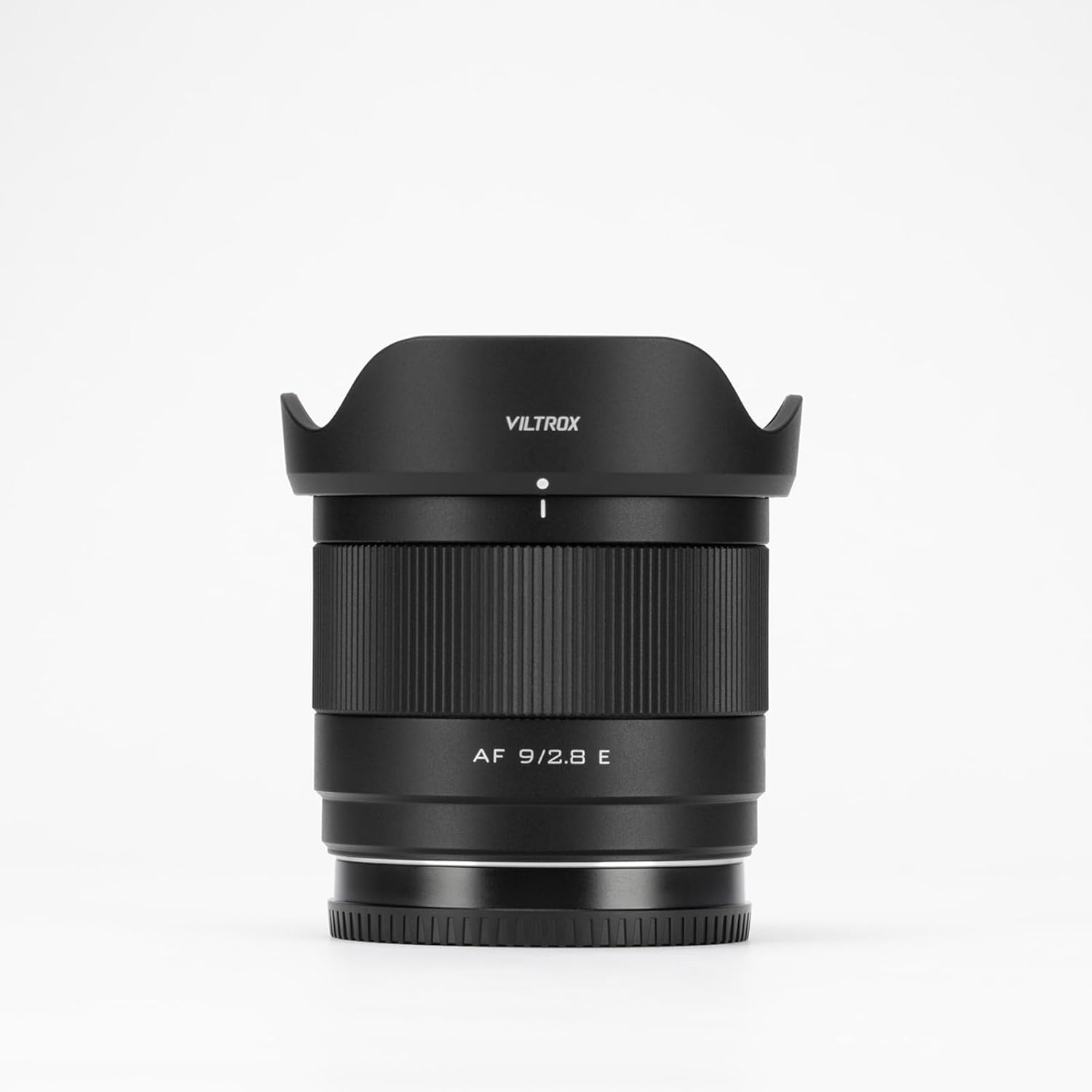
APS-C sensors apply a 1.5× crop factor to focal lengths — so a 9mm lens behaves roughly like a 13.5mm lens would on a full-frame camera. That’s seriously wide, well-suited for environmental portraits, architecture, real estate interiors, street photography, and astrophotography where you want foreground stars and a Milky Way arc in the same frame.
Viltrox earned a reputation for affordable but optically inconsistent lenses in its early years, and that reputation has been slow to die even as the products improved. One Viltrox 9mm owner’s review on The Phoblographer is worth quoting directly here: the reviewer updated their initial write-up from skeptical to “excellent” after extended real-world shooting, noting that first impressions from sample images undersold the lens’s in-person rendering. That credibility arc — early skepticism resolved by field use — is exactly the pattern Viltrox has been working to establish, and the 9mm appears to be a genuine inflection point for the brand.
Published specs put the f/1.8 maximum aperture roughly two and two-thirds stops brighter than the kit lens at its widest end. In practical terms, that’s the difference between a clean 3200 ISO shot and a grainy 16000 ISO shot in the same room. Autofocus is native and fast, which matters if you’re shooting video or subjects that move unpredictably.
The trade-off is field curvature at close focus distances and barrel distortion that requires in-camera or post-processing correction — both documented in The Phoblographer’s published review. For flat-wall architectural photography, that’s a real consideration. For storytelling imagery where slight distortion adds dynamism, many owners report it’s a non-issue in practice.
By the numbers — Viltrox 9mm vs. kit at equivalent wide end:
| Sony 16-50mm at 16mm | Viltrox 9mm f/1.8 | |
|---|---|---|
| Equivalent full-frame view | ~24mm | ~13.5mm |
| Max aperture | f/3.5 | f/1.8 |
| Light advantage | baseline | ~2.7 stops brighter |
| Street price (May 2026) | ~$350 bundled | ~$399 standalone |
Tamron 17-70mm f/2.8: The Lens That Has Its Own Fan Club
No lens in the Sony APS-C third-party ecosystem draws quite as consistent praise as the Tamron 17-70mm f/2.8 Di III-A VC RXD. The enthusiasm cuts across buyer profiles in a way that’s worth paying attention to: DPReview’s published review highlighted its optical performance at a price point that undercuts Sony’s own 16-55mm f/2.8 G by a significant margin. Parents buying it for teenage filmmakers, solo videographers running it as a one-lens solution, and photographers who use it on full-frame Sony bodies in APS-C crop mode (more on that below) all surface as enthusiastic long-term owners.
The core proposition is straightforward: f/2.8 throughout the entire zoom range, from a versatile 17mm wide end to a useful 70mm portrait length. On APS-C, that translates to roughly 25.5–105mm equivalent — a genuinely all-purpose range that covers street, environmental portrait, and even some compressed telephoto work. For video shooters in particular, the combination of fast autofocus, optical image stabilization (VC in Tamron’s nomenclature), and silent aperture control addresses almost every complaint about shooting handheld narrative content.
The single recurring complaint in long-run reviews is weight. At approximately 525 grams, it’s noticeably heavier than the kit lens and even somewhat heavier than Sony’s own 16-55mm f/2.8 G. One owner’s solution became a memorable forum fixture: using a monopod as a walking stick during all-day shoots, then deploying it properly when stationary. It’s a practical workaround, but it’s also an honest signal that this is a working photographer’s lens that demands a working photographer’s commitment to carry.
Photography Life’s Sony E-Mount APS-C lens overview consistently positions the Tamron 17-70mm as the value-per-optical-quality leader in the f/2.8 zoom category for crop-sensor Sony bodies, a conclusion that aggregated owner sentiment broadly supports as of early 2026.
Can you use the Tamron 17-70mm on a Sony a6700 as your only lens? The short answer is yes, with awareness of what you’re giving up. The a6700’s in-body stabilization (IBIS) pairs well with the Tamron’s optical stabilization, giving you strong handheld coverage. What you don’t have is reach beyond 70mm (105mm equivalent) — if you regularly photograph wildlife, sports, or distant subjects, a telephoto companion is a genuine gap. As a primary lens for daily life, portraiture, travel, and video, it’s a credible single-lens choice.
Sony 55-210mm Renewed: Safe Used Buy or Gamble?
The Sony 55-210mm f/4.5-6.3 OSS — particularly in its renewed or certified pre-owned form through MPB or KEH Camera — occupies an interesting position. It’s optically unremarkable by modern standards, but it fills a focal length gap that the three lenses above don’t touch. On APS-C, the 55-210mm range translates to roughly 82–315mm equivalent, which is serious reach for wildlife, sports, events, and any telephoto work.
Owners’ reviews of the renewed version are notably brief but consistently satisfied — no quality complaints about optical degradation, no reports of autofocus hunting or stabilization failures. That brevity is actually a positive signal in aggregated review data: unhappy lens owners write long complaints; satisfied ones write three sentences and move on. Lensrentals’ rental trend data from 2024–2025 suggests the 55-210mm remains in consistent demand as a companion telephoto for entry-level Sony APS-C bodies, which implies it holds up under repeated use.
The honest limitations: f/6.3 at the long end is genuinely slow, requiring bright light or high ISO for sharp wildlife shots of moving subjects. It’s not a lens for indoor sports or dim-light events. As a daylight telephoto companion paired with the Tamron 17-70mm, it covers the focal length map efficiently at a price that leaves budget for other priorities.
For buyers asking whether renewed is a safe purchase: MPB’s grading system and KEH’s condition ratings are industry-standard, and both carry return policies that limit downside risk. The math generally favors renewed over new for a lens in this optical tier — you’re not buying cutting-edge performance, so condition matters more than vintage.
Building a Two-Lens Kit: What’s the Minimum Viable Budget?
If you’re starting with a Sony APS-C body and want to move beyond the kit lens to something genuinely versatile, here’s how the realistic entry points shake out as of May 2026:
- Kit lens retained + Viltrox 9mm: Wide-end versatility and low-light headroom, keeping the 16-50mm for everything else. Budget addition: ~$399.
- Tamron 17-70mm + Sony 55-210mm renewed: A proper two-lens system covering ~25mm to ~315mm equivalent with fast aperture across the primary range. Budget: ~$700–$800 for the pair.
- Viltrox 9mm + Tamron 17-70mm: Wide-to-standard coverage with maximum low-light capability across both lenses. No telephoto reach. Budget: ~$750–$800.
The minimum credible two-lens kit — meaning one that handles the majority of real-world shooting scenarios without obvious gaps — is the Tamron 17-70mm paired with the Sony 55-210mm renewed, landing around $700–$800 total. PetaPixel’s a6700 real-world coverage consistently surfaces this pairing as the practical daily kit for photographers who don’t need the ultra-wide angle.
If X, Then Y: The Decision Rules
- If you shoot mostly outdoors in good light and your current images satisfy you: Keep the kit lens another season. Buy a battery grip or a quality UV filter instead.
- If you shoot indoor events, low-light portraits, astrophotography, or wide video: The Viltrox 9mm is your first buy. Pair it with the kit lens until you’re ready for the Tamron.
- If you want one lens that handles most of your shooting, including video: The Tamron 17-70mm f/2.8 is the clear answer. It will serve you on an a6700, an a6400, or even a full-frame body in crop mode for years.
- If you need telephoto reach for wildlife, sports, or travel: Add the Sony 55-210mm renewed as a second body or companion lens. It’s the lowest-risk telephoto entry point in the ecosystem.
- If budget is tight and you’re choosing between the Tamron and waiting: Rent the Tamron first through a service like LensRentals for a weekend shoot. If it earns its keep in one trip, you’ll know.
Frequently Asked Questions
Is the Tamron 17-70mm f/2.8 worth the price over the Sony kit lens for someone just starting out? Not automatically. The kit lens is adequate for outdoor daylight shooting, and the Tamron is noticeably heavier — a real daily-carry consideration. The upgrade makes sense when you’re consistently frustrated by low-light results or when video quality becomes a priority. If you’re shooting your first hundred frames and unsure what bothers you yet, keep the kit lens and revisit this in six months.
Does the Viltrox 9mm work on full-frame Sony bodies in crop mode? Yes. The Viltrox 9mm is an APS-C lens, so it will vignette heavily on a full-frame sensor at full coverage. In APS-C crop mode on a body like the Sony A7 IV or A7C, it works correctly, though your full-frame sensor is functionally cropped to APS-C size, reducing your resolution proportionally. It’s not ideal as a full-frame purchase, but it’s usable.
Is the Sony 55-210mm renewed lens a safe buy or a gamble? Based on aggregated owner reports and MPB/KEH grading standards, renewed examples in “good” or “excellent” condition carry minimal risk. Long-run reviews show no widespread pattern of optical or autofocus failure. The return policies from reputable certified resellers provide a meaningful safety net. It’s as close to a safe used buy as this category offers.
Can I use the Tamron 17-70mm on the a6700 as my only lens? Yes, with the caveat that you won’t have telephoto reach beyond 105mm equivalent. For most travel, portrait, street, and video work, the focal range covers the majority of real-world scenarios. If you regularly photograph wildlife, sports, or subjects that require compression at distance, you’ll feel the gap. As a primary lens for daily and creative work, it’s one of the strongest single-lens arguments in the Sony APS-C system.
What’s the minimum budget to build a credible two-lens Sony APS-C kit? Around $700–$800 gets you the Tamron 17-70mm paired with a Sony 55-210mm renewed, covering roughly 25mm to 315mm equivalent with a fast primary zoom. That’s the practical floor for a system that handles the majority of shooting scenarios without obvious gaps. Dropping below that typically means one lens makes a significant compromise — either in aperture, range, or optical consistency.