June 12, 2026 • Declan Marsh • 10 min reading time • Prices verified June 11, 2026
Sony a6400 vs. a6700: The APS-C Upgrade Decision When You Already Own E-Mount Glass

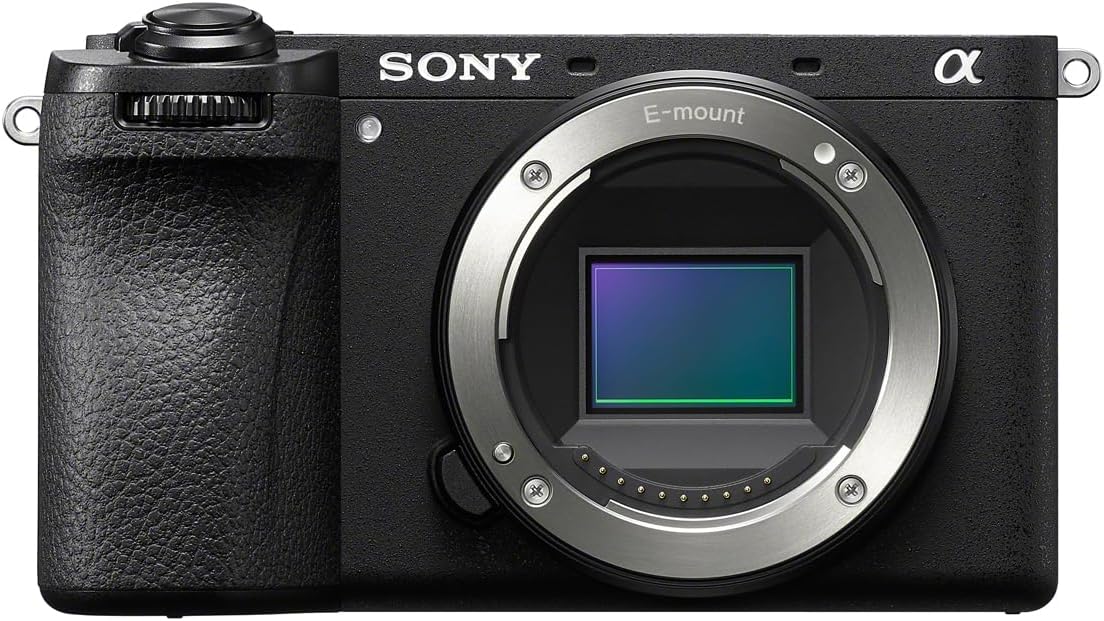
You already own Sony E-mount glass — lenses that attach to Sony’s proprietary mount standard used across their APS-C and full-frame mirrorless lineup — and at some point the question moves from “should I shoot more?” to “should I upgrade my body?” The Sony a6400, released in 2019, is a compact APS-C mirrorless camera (APS-C refers to a sensor roughly half the size of a 35mm film frame, delivering a 1.5× crop factor with any attached lens). The a6700 arrived in 2023 as Sony’s current flagship APS-C body, bringing a newer processor, AI-assisted subject tracking, and video capabilities that inch toward professional territory. This article is for the shooter who already has skin in the Sony E-mount game: you want to know whether the upgrade is worth the delta, what you actually gain, and what the honest tradeoffs are before you commit.
Let’s walk through it systematically.
What You’re Actually Paying For: The Core Spec Delta
The price gap between these two bodies has stabilized meaningfully as of mid-2026. The a6400 now trades in the $700–$800 range new and $450–$550 on the used market from reputable resellers in excellent condition, while the a6700 sits at roughly $1,300–$1,400 new and $950–$1,100 certified pre-owned. That’s a real gap — roughly $500–$600 depending on which path you take.
By the numbers:
| Feature | a6400 | a6700 |
|---|---|---|
| Sensor resolution | 24.2 MP | 26.0 MP |
| In-body stabilization (IBIS) | None | 5-axis, 5-stop rated |
| Subject-recognition AF | Face/Eye only | AI: human, animal, bird, insect, car, train, plane |
| Video | 4K/30p (cropped) | 4K/60p (full-width), S-Log3, 4:2:2 10-bit |
| Battery life (CIPA rated) | ~410 shots | ~570 shots |
The resolution bump is negligible in practice — 24 vs. 26 megapixels is not why you’re here. The headline upgrades are IBIS, the expanded AI autofocus, and video capability. Everything else is supporting cast.
Autofocus: Where the Generation Gap Is Sharpest
The a6400: Still Competitive for Everyday Subjects
The a6400 launched with autofocus that DPReview, in their Sony a6400 full review, described as among the best available on any APS-C camera at the time. In 2026, that assessment holds for the use cases it was designed for: faces, eyes, and reasonably cooperative subjects. For family shoots, portrait sessions, and travel photography, the a6400 tracks with confidence and very rarely hunts in decent light. If your shooting is primarily stills of people in predictable situations, the autofocus ceiling on the a6400 may never become a real frustration.

SONY
$217.43
In stock on Amazon
Check price on AmazonThe a6700: AI Tracking Changes the Keeper Rate
The a6700 moves the ceiling in ways that are harder to dismiss. The Phoblographer, in their Sony a6700 review, specifically described the AI subject tracking as operating on another level compared to the previous generation — and that framing holds up across aggregated owner reports. The difference isn’t limited to expanded subject categories, though the ability to lock onto a bird in flight, a moving vehicle, or an insect is genuinely new functionality. The underlying AI recognition is more persistent: it recovers faster when a subject moves behind an obstacle, and it’s less likely to confuse a subject’s shoulder for their face in a cluttered frame.
For everyday subjects — kids, travel moments, casual portraits — you’ll notice the improvement, but not on every shot. Where you feel it most is in the percentage of keepers from a fast-moving sequence. Owners consistently report that the a6700’s tracking reduces the culling burden in exactly the situations that frustrated them with older bodies: birthday candles being blown out, dogs running toward the camera, crowded street scenes where subjects cross each other.
Sony
$857.00
In stock on Amazon
Check price on AmazonThe Decision Point on Autofocus Alone
If your current keeper rate from moving subjects is already satisfying you on the a6400, autofocus improvement alone probably doesn’t justify the upgrade cost. If you’re regularly disappointed by missed focus in action sequences — sports, wildlife, fast children — it does. That’s the honest line.
Sony
$1,498.00
In stock on Amazon
Check price on AmazonIBIS, Video, and the Tamron 17-70mm Pairing Question
Here’s where the a6700 makes its clearest case for the practitioner-level shooter.
The a6400 has no in-body image stabilization. It relies entirely on optical stabilization built into the lens — which many native E-mount lenses lack, particularly fast primes. The a6700’s 5-axis IBIS changes what you can do with a given lens. Photography Life, in their Sony a6400 overview, notes that stabilization parity between body and lens is one of the most consistent requests from E-mount APS-C users. The a6700 partially delivers on that.
The Tamron 17-70mm f/2.8 — an E-mount compatible zoom that reviewers across DPReview, Photography Life, and The Phoblographer consistently pair with Sony APS-C bodies as a do-everything primary lens — benefits meaningfully from the a6700’s IBIS. On the a6400, the Tamron 17-70’s optical stabilization works but is limited to the lens’s own correction. On the a6700, the combined optical and sensor stabilization works in coordination, and owners report noticeably more confident handheld shooting in low light at the wide end of the zoom range, where lens-based stabilization is least effective.
For the shooter whose kit centers on the Tamron 17-70 as a primary walk-around lens, this is a concrete pairing advantage — not a theoretical one. If you’re shooting events, travel, or documentary-style work where a tripod isn’t always practical, that coordination matters in a way that shows up in your actual images.
On video: the a6700 opens a path that simply doesn’t exist on the a6400. S-Log3 (a flat picture profile that preserves dynamic range for color grading in post-production), 4:2:2 10-bit color recording (a higher-quality color data format that retains more information for post work), and 4K/60p without a significant sensor crop are the three capabilities that separate the two bodies for anyone moving into hybrid shooting. Imaging Resource, in their Sony a6400 full review, was direct about the older body’s video limitations — the 4K crop and 8-bit color depth put a ceiling on how far you can push footage in post-production. If video is more than occasional for you, the a6700 is the only reasonable choice in this comparison.
The Grip Problem: Ergonomics as an Honest Signal
One signal from a6700 owner reviews deserves more weight than it usually gets: the persistent complaint that the small form factor remains a liability with heavier glass. PetaPixel, in their Sony a6700 hands-on preview, noted this tension directly — the a6700 packs a substantial sensor and processing pipeline into a body that was designed for compactness, and the grip depth is the most common casualty of that design priority.
With a telephoto zoom like the Sony 55-210mm (a budget-friendly option that frequently appears in E-mount APS-C kit recommendations), the weight imbalance is noticeable. The lens-heavy combination becomes tiring over a long shooting day, and owners who shoot with longer glass consistently recommend adding a third-party L-bracket or extended grip plate to the a6700. This is a $50–$100 accessory cost that should factor into your real upgrade budget.
The a6400 shares the same compact body design, so it’s not that the a6400 is ergonomically superior — both cameras carry the same compromise. If you’re upgrading specifically because you’ve added heavier lenses to your kit and the balance frustrates you, neither body fully solves the problem. A Sony a7-series full-frame body with a deeper grip would address it more directly.
This matters for the upgrade calculus: if grip discomfort is part of why you’re considering a change, the a6700 won’t fix it.
Is the a6400 Still Worth Buying in 2026?
Yes — for a specific buyer. The a6400 remains one of the best-value APS-C mirrorless bodies available when purchased used. Photography Life’s coverage of the Sony APS-C ecosystem consistently positions it as a competent, reliable camera whose autofocus still outperforms most competing bodies at the same price point. A certified pre-owned a6400 in the $450–$550 range from reputable resellers is a sound investment for a first-time mirrorless buyer or a shooter whose needs are solidly stills-focused and who photographs mostly cooperative subjects.
Where the case gets harder is buying new. At $700–$800 retail, the delta to a used a6700 becomes narrow enough that the a6700’s IBIS and AI tracking start to look like obvious value. The sweet spot for the a6400 in 2026 is the used market — not the retail shelf.
The Decision Rule
If X, then Y:
-
If you shoot primarily stills of people and travel, and your current keeper rate is acceptable: The a6400 used is your best-value option. Spend the savings on glass — the Tamron 17-70mm f/2.8 will do more for your images than a body upgrade at this stage.
-
If you shoot fast-moving subjects (sports, kids, wildlife) and your keeper rate frustrates you: The a6700’s AI tracking justifies the price gap. This is where the upgrade earns its cost directly and consistently.
-
If you’re doing any serious video — events, hybrid shooting, content that requires color grading: The a6700 is the minimum viable body. The a6400’s video ceiling is real, documented, and you will hit it.
-
If you shoot extensively with the Tamron 17-70mm f/2.8 as your primary lens: The a6700 pairing with combined IBIS is a meaningful practical upgrade, especially for handheld low-light and event work.
-
If ergonomics are already a frustration with your current Sony APS-C body: Neither camera solves the grip problem. Consider whether a Sony a7-series body is actually what you’re reaching for.
Frequently Asked Questions
Is the a6700’s autofocus improvement noticeable for everyday subjects like family and travel, or only for sports and wildlife? Owners consistently report a noticeable improvement in everyday shooting — particularly in how quickly the camera recovers when a subject’s face is briefly obscured and in cluttered scenes with multiple potential subjects. It’s not a night-and-day difference for a cooperative portrait subject in good light, but in the unpredictable moments that define family and travel photography, the AI tracking reduces missed shots in a way that shows up when you’re culling a session.
Can I use my existing Sony E-mount lenses on both bodies without an adapter? Yes. Both the a6400 and a6700 use the Sony E-mount natively. Every E-mount lens — Sony-branded or third-party like Tamron and Sigma — works on both bodies without any adapter. Full electronic communication, including autofocus and image stabilization coordination, is maintained on both.
Is the Tamron 17-70mm f/2.8 better paired with the a6400 or a6700? The lens works well on both, but it pairs more effectively with the a6700. The combined optical and sensor stabilization on the a6700 improves handheld performance at the wide end and in lower light. On the a6400, you’re relying solely on the lens’s built-in stabilization, which is competent but not as robust in the same conditions.
Does the a6700’s small grip become a problem with heavier lenses? Yes — this is a real and consistent complaint from owners, and one that PetaPixel flagged in their hands-on preview. With longer telephoto lenses, the balance shifts heavily toward the lens. An L-bracket or grip extension is a practical addition to the kit if you regularly shoot with heavier glass. Factor roughly $50–$100 into the upgrade cost if this applies to your shooting style.
Is the a6400 still worth buying in 2026, or is the price gap to the a6700 now small enough to skip it? The a6400 remains worth buying — specifically in the used and certified pre-owned market. At $450–$550 from reputable resellers, it delivers excellent stills capability and proven autofocus performance that DPReview confirmed holds up against APS-C competition. Buying it new is harder to justify: the $700–$800 retail price puts it close enough to a used a6700 that the a6700’s advantages become difficult to pass up. The a6400’s strongest argument in 2026 is as a used-market buy, not a new-box purchase.